


Products
Industries
LinkAige
About


European ports are entering a pivotal phase of transformation. Increasing throughput, stricter sustainability mandates, and the drive for operational efficiency are pushing ports to rethink how they manage logistics. Intelligent modular port automation — flexible, scalable, and minimally disruptive—is emerging as the preferred path, offering a stepwise approach that enhances operations while respecting existing workflows.
Westwell’s full-stack "AInergy": AI and new-energy solutions are helping ports embrace this transition, turning automation concepts into real-world results. The SMART framework—Sustainable, Maintainable, Adapted, Replicable, Technical—guides this modernization, ensuring ports can evolve safely, efficiently, and sustainably.
The Port of Felixstowe provides a tangible example of this shift in action, demonstrating that modular automation can integrate seamlessly with existing operations, support human operators, and enhance both efficiency and environmental performance. Across Europe, this approach is setting the stage for a new era of smart, sustainable port logistics.
A key driver of this transformation is sustainability, which underpins both operational efficiency and long-term viability. European ports are under growing pressure to reduce their carbon footprint and comply with ambitious EU initiatives, including the European Green Deal and Fit for 55 targets. These regulations are accelerating the shift toward port decarbonization and more sustainable operations.
Modular automation solutions play a central role in meeting these goals. By optimizing vehicle movements, reducing idle times, and integrating electrified fleets, ports can significantly cut emissions without disrupting daily operations. Advanced AI logistics systems further enhance efficiency by intelligently scheduling vehicles and resources, minimizing congestion and energy waste across terminals.
Westwell’s Ainergy strategy (AI + New Energy) takes sustainability a step further. Beyond simply electrifying trucks, it combines smart automation, data-driven fleet management, and energy optimization to deliver measurable reductions in fuel consumption, emissions, and operational costs.
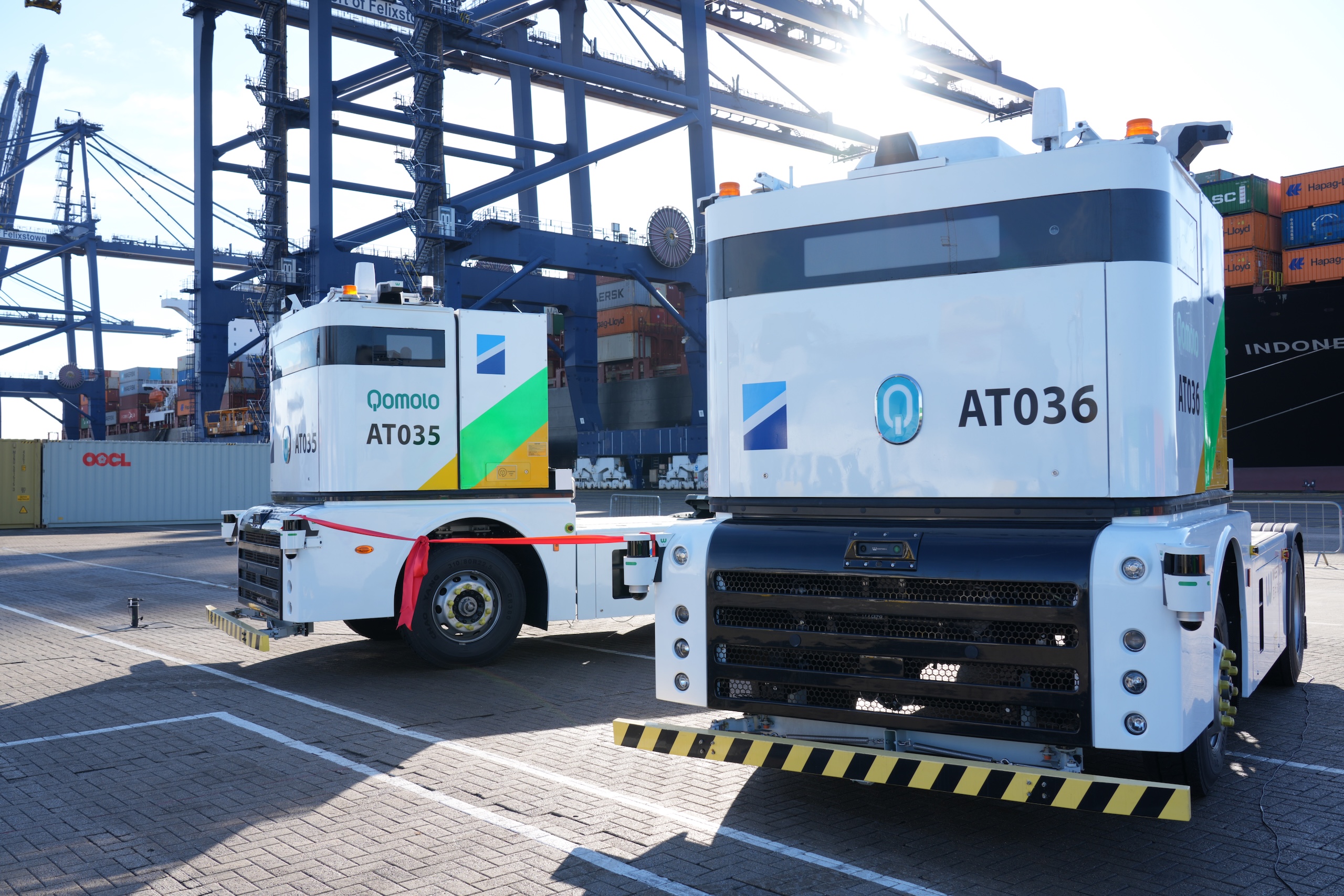
Looking ahead, the focus is shifting toward ecosystem-level decarbonization—connecting terminals, hinterlands, and logistics corridors into a coherent, low-carbon network. By leveraging modular logistics and AI-powered port automation, European ports can evolve into green ports that balance operational efficiency with environmental responsibility.
Building on sustainability as the foundation, modular automation enables ports to operate more intelligently and safely in real-world conditions.
At the Port of Felixstowe, the Q-Pilot Multi-Scenario Autonomous Driving system enables autonomous logistics solutions to operate safely in complex and congested environments. Even under challenging European coastal conditions—sea fog, glare, rain, or low-flying birds—the system maintains stable perception and centimeter-level positioning, ensuring precise and predictable truck movements across the port.
The WellFMS Fleet Management System coordinates the Q-Truck (the autonomous yard trucks), managing real-time routing, conflict avoidance, and task allocation. This ensures that the autonomous fleet operates safely alongside human-driven vehicles while maintaining smooth, reliable, and predictable port operations. By combining Q-Pilot’s advanced perception with WellFMS’s intelligent fleet management, Westwell delivers smarter, safer, and more predictable port movement flows without requiring major infrastructure changes.
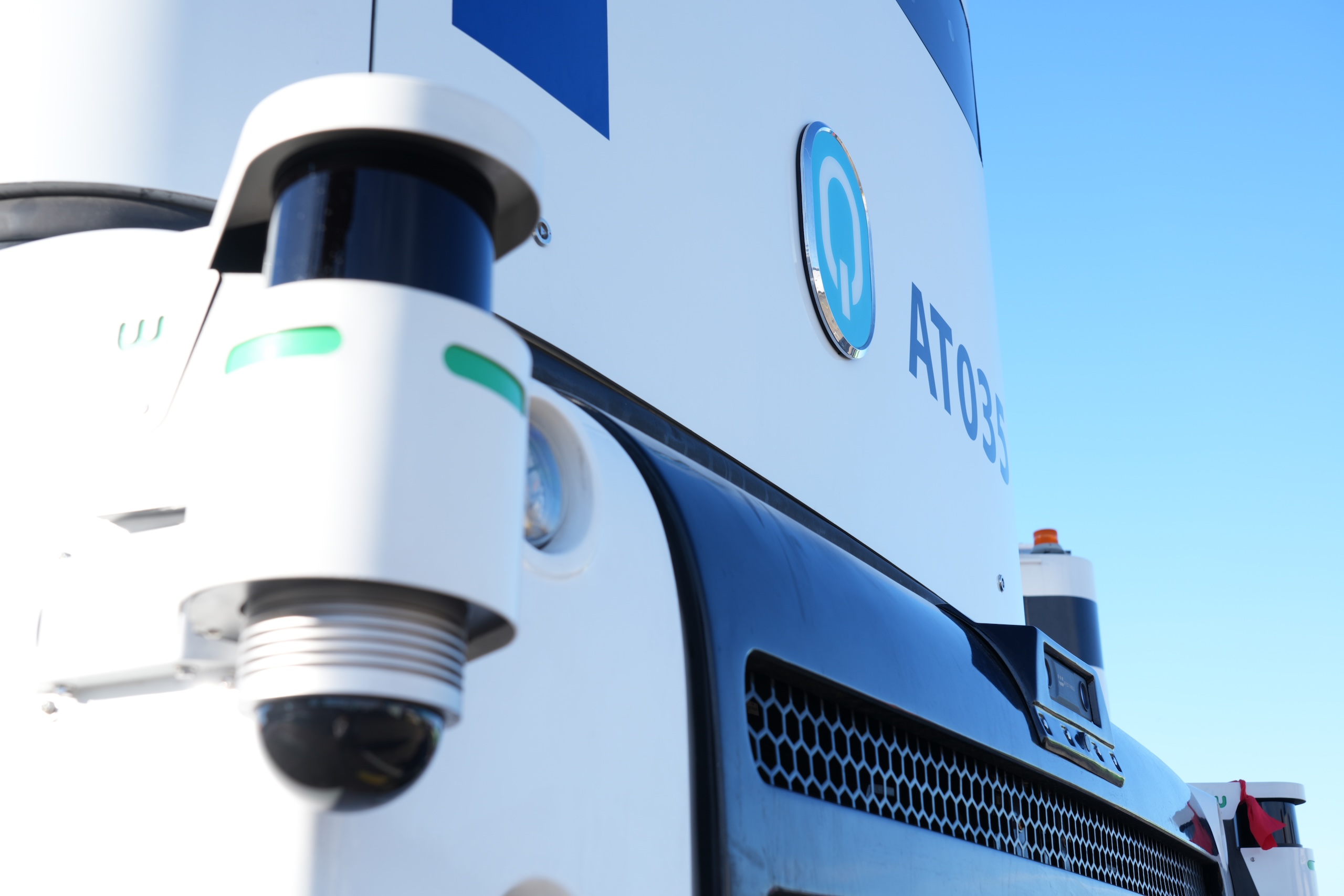
Westwell’s approach to modular automation is built on a “From human to human” value, designed to support people rather than replace them. At ports like Felixstowe, autonomous Q-Trucks operate alongside human-driven vehicles, seamlessly integrating into existing workflows.
By complementing human operators, modular automation enhances safety, reduces operational stress, and enables more predictable and efficient port movements. This human-augmented model ensures that technology strengthens port operations, helping teams focus on critical tasks while autonomous systems handle repetitive or high-precision logistics tasks.
Modular systems give ports the flexibility to upgrade incrementally and scale across different quays, terminals, or transport corridors. This approach ensures consistent, predictable performance for supply chain partners, while aligning with European safety and operational standards. By combining intelligent driving systems, data-driven fleet management, and flexible automation modules, Westwell empowers ports to evolve gradually toward smarter, more sustainable operations.
The SMART Forward framework represents Westwell’s strategic approach to modernizing European ports over the next decade:
Modular automation and electrified fleets reduce emissions, lower fuel consumption, and minimize operational waste. Each Q-Truck by Westwell is estimated to cut up to 50 tons of carbon dioxide per unit annually, helping ports achieve measurable decarbonization targets and advance toward greener, more sustainable operations.
Modular systems allow updates, repairs, and capacity expansions without halting terminal operations, ensuring operational continuity and resilience. With WeWelll Full Lifecycle Support & Services, ports benefit from predictive maintenance, real-time monitoring, and tailored after-sales services, keeping autonomous fleets and supporting systems running smoothly while minimizing downtime.
Westwell’s modular automation solutions are designed to fit seamlessly into Europe’s diverse regulatory, cultural, and operational environments. From adhering to strict EU safety and environmental standards to respecting existing port workflows, each deployment is tailored to local requirements. This ensures that ports like Felixstowe can adopt automation without disrupting ongoing operations, while still achieving measurable gains in efficiency and safety.
The modular and flexible design of Westwell’s solutions makes them highly scalable and transferable across ports of different sizes and layouts. By leveraging standardized modules, ports can replicate best practices for automation, operational efficiency, and sustainability, shortening deployment cycles and lowering implementation risks.
The Ainergy strategy (AI + New Energy) provides the technical backbone that powers Westwell’s modular systems. Combining advanced AI-driven perception, intelligent fleet management, and electrified fleets, the platform ensures precision, reliability, and energy efficiency. This enables ports to not only meet current operational demands but also future-proof operations for evolving logistics needs, supporting long-term growth, greener operations, and adaptive automation at scale.
By actively applying the SMART Forward framework, Westwell is enabling European ports to adopt innovation safely, efficiently, and sustainably, creating a roadmap for the next generation of port operations.
Europe is entering an era where flexible, low-disruption automation defines port competitiveness. Modular smart solutions enable ports to modernize while maintaining ongoing operations, combining safety, efficiency, and sustainability.
From Port of Felixstowe to other European gateways, scalable automation modules pave the way toward predictable, green, and resilient supply chains. With Westwell’s integrated approach, automation is no longer just a vision — it’s in action, shaping the next chapter of European port transformation.