


Products
Industries
LinkAige
About


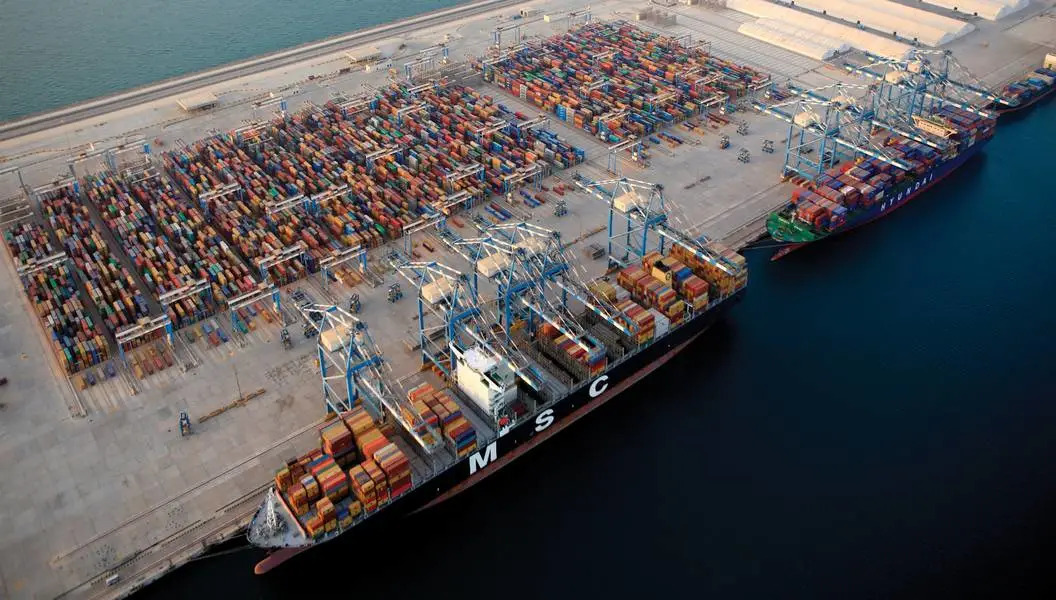
(Photo) Khalifa Port, one of the busiest ports in the world
Today, the Q-Truck autonomous driving truck fleet, developed by Westwell Technology, an artificial intelligence company, has been involved in ship operations at CSP Abu Dhabi Terminal. This has helped make it the first terminal in the Middle East to implement an automated port truck system. The project was signed in the second half of 2020, initiating the "agent operation of autonomous driving commercial vehicles" mode for the first time, aiming to boost the transformation of port digital intelligence with a lean start-up approach.
Large Investment and Difficult Start-up: Core Pain Points of Port Digital Intelligence Transformation
Khalifa Port in Abu Dhabi, United Arab Emirates, is located at the crossroads of shipping in West Asia. It is a key node on the "Belt and Road" and one of the world's busiest ports.
CSP Abu Dhabi Terminal is the first project operated by CSP Ports in the Middle East, and the first worldwide greenfield holdings project by COSCO Shipping Port. This marks a significant achievement in the implementation of the "21st Century Maritime Silk Road" co-built by China and Arab countries through the port shipping industry.
Khalifa Port is accelerating its transformation to digital intelligence, aiming to win the intense competition among world-class ports and establish an internationally leading green logistics hub port. It hopes to become an example of intelligent transformation for traditional terminals.
Today, intelligence and automation are global port development trends. However, due to high costs and limited site choices for new automated terminals, the number of fully automated container terminals constructed and operated worldwide remains small. Several reasons underlie this:
For instance, constructing a medium-sized semi-automated terminal with an annual throughput of 2 million TEU generally requires an investment exceeding 1 billion yuan. Therefore, large investment and difficult start-up scenarios have become key pain points during the transformation of traditional port automation.
As the first AI enterprise to enter ports, Westwell has keenly identified these pain points in traditional port transformation. Vincent, COO of Westwell, said: "For ports, introducing any intelligent upgrading product involves coordinating with the entire terminal infrastructure. This could lead to the port being unable to operate for a period, resulting in significant profit losses. Therefore, while many ports have embraced the idea of digital upgrading, they are limited by the capital and operational pressures required for the transformation."
New Model of Commercial Agent Operation Helps Develop New Advantages of Digital Economy
Considering this, Westwell asked whether they could provide users with more options, such as quickly modularizing fundamental autonomous driving capabilities, purchasing an entire autonomous driving fleet and management system, or adopting a new commercial agent operation model to help autonomous driving achieve faster business implementation.
In the second half of 2020, Westwell secured the contract for the first agent operation of commercial autonomous vehicles and officially arrived at CSP Abu Dhabi Terminal. By the end of March 2021, six Westwell Q-Truck new energy autonomous vehicles were at the Khalifa Port in Abu Dhabi. Westwell Technology's team of experts and engineers went deep into the port to help customers with deployment and on-site debugging.
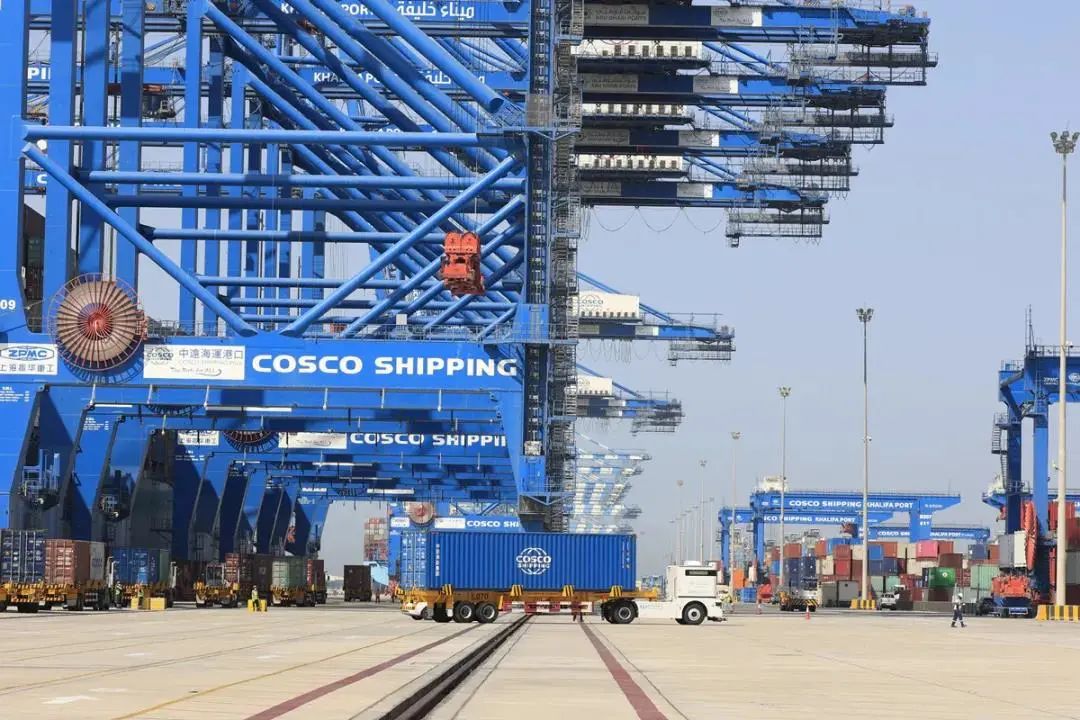
(Photo) Q-Truck autonomous driving truck fleet participates in terminal operation
Despite facing challenges like the local average daily high temperature of over 40 degrees Celsius, the Q-Truck autonomous fleet became involved in the terminal's ship operations. Q-Trucks can operate uninterruptedly for 24 hours, carrying multiple sets of industrial-grade sensors. These vehicles feature ultra-high-precision positioning and identification capabilities and do not require extensive, complex infrastructure reconstruction of the terminal.
The fleet adopts a "taxi-taking" operation mode. The system analyzes online orders and assigns Q-Trucks on the optimal route for independent operations, with expenditures calculated based on the number of containers moved. This business model from Westwell Technology establishes the optimal online connection between products and customers, providing a novel choice for upgrading digital and intelligent ports and terminals with a C-terminal-operated mode.
This mode runs smoothly because Westwell has been working in ports since its inception. Through continuous optimization and iteration of actual operation experience, they have replaced long-time, high-intensity, and high-risk driving work, providing users with cost-efficient autonomous driving products and support systems.
By analyzing this mode, it becomes clear that AI enterprises will enable users to agilely adopt artificial intelligence, significantly reducing purchasing costs in the early stages of conventional port transformation. This approach effectively addresses the core pain point of "long start-up cycles" in intelligent upgrading and enables closed-loop innovative businesses by harnessing AI and blockchain technology for service-oriented asset and financial services.
Using AI service-oriented products (AIaaS) to assist with automation operations, this digitally-capable and innovation-driven business model enhances the modernization of traditional industrial chains, thereby improving the quality of the real economy and core competitiveness.
Westwell leverages AI advantages and scenario applications to promote the deep integration of digital technology and the real economy, utilizing technical strength and business strategy. In doing so, they provide a brand-new idea for "developing new advantages of digital economy."
AI Power Leads the Intelligence Upgrading of Global Ports
The deployment of Westwell's Q-Truck autonomous fleet at Khalifa Port not only drives the port's digital and intelligent transformation but also garnered extensive coverage from local and international media.
In an interview with Transport and Logistics Middle East, Saif Al Mazrouei, Head of Port Group at Abu Dhabi Ports, stated, "Westwell's Q-Truck autonomous vehicles integrate artificial intelligence, Internet of Things, and pure electric technology. This enhances the operational and environmental benefits at the port, further consolidating Khalifa Port's leading advantage in Middle East maritime transportation. It serves as a great example of port logistics industry upgrading aided by innovative technology."
The level of port digital intelligence is considered a crucial means to enhance core competitiveness, hence, the move towards automation is the general trend, a need made more pressing by the pandemic. The commercial agent operation modality, spearheaded by Westwell's Q-Truck autonomous vehicles, helps terminal operations become automated and zero-contact, reducing the risk of human infection and ensuring the uninterrupted functions of the port. This approach carries numerous benefits like swift cost efficiency implementation, safety improvement, and environmental safeguarding; all offering huge potential and commercial value over the long term.
In the future, Westwell will continue to delve into the application scenarios of autonomous driving trucks, promoting the commercial agent operation model of autonomous vehicles on a broader scale. The aim is to stimulate the digital and intelligent transformation of traditional industries, utilizing leading autonomous driving technology to contribute to the strength of intelligence.
In reaction to this, Kenny, Founder and CEO of Westwell, claimed, "Digital intelligence technology is a critical force for transforming the port industry, while high-level autonomous driving is the cornerstone of smart port construction. By placing equal emphasis on both technological and commercial innovation, artificial intelligence can better assist and liberate humanity, leading to an improvement in our quality of life."