


Products
Industries
LinkAige
About



In the post-epidemic era, as the global trade rebounds, the tourism industry heats up, carbon emission and other environmental issues become increasingly concerned, how to improve the travel experience of passengers, increase the operation efficiency, and carry out business around the concept of sustainable development is gradually becoming the key issues and directions of the development of the global aviation industry.
In June 2023, the 33rd Airports Council International (ACI) Europe and World Annual General Assembly (WAGA 2023) was held in Barcelona, Spain. The assembly recognized the outstanding achievements and performance of European airports in digital transformation, ecological innovation, global business partners and other fields. The rapid pace of technological change has brought revolutionary changes to the European aviation industry, making it the first to make significant progress in the transformation.
Based on the case of major airports in Europe, this paper will sort out the intelligence, digital, and green transformation of European aviation industry to provide enlightenment and reference for China to further build the world hub airport and enhance the global competitiveness of the airport.

01. From “Single Sky” to “Digital, Intelligent, and Green” Sky
SingleEuropean Sky (SES) initiative was launched in the 1990s to modernize the European air traffic management system to meet the needs of future airspace capacity and security. In 2017, SESAR Joint Undertaking proposed the concept of “European Digital European Sky” for the first time; in September 2019, the development strategy of European Digital Sky was formally established.
At present, the SESAR solution that has been validated to be delivered and deployed in Europe is divided into four scenarios: airport operation, air traffic service, air traffic management network, and aviation infrastructure. As a result, the European aviation industry has transformed its deployment from “single sky” to “digital sky”.
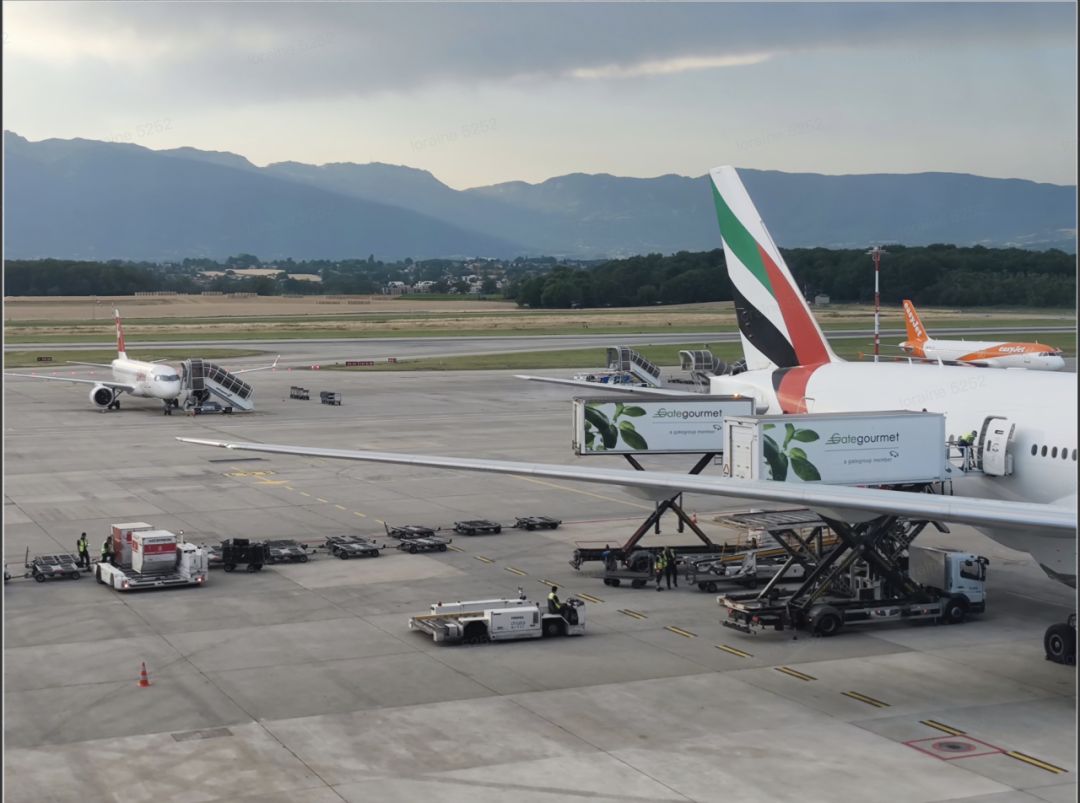
From the top design, European aviation industry also reflects the turn from “smart sky” into “green sky”. Its overall development strategy was first seen in “Vision 2020” published in 2001 and anchored in “Flight path 2050” in 2011 as a further 2050.
On June 14, 2022, the European Union officially released a new strategic program for the European aviation industry, “Fly the Green Deal-Europe’s Vision for Sustainable Aviation”, proposing the following three general goals: achievement of climate neutrality in the aviation industry, passengers-orientation, expanding global leadership and enhancing competitiveness.
In addition, the Department for Transport published the report of “Flightpath to the Future” on May 26, 2022, with “The Ten-Point Plan” including sustainable resumption, improvement of user experience, and encouragement of technology development and application, etc. The details of targets and plan setting may vary compared with EU, but the general direction is basically the same. The UK will keep on the cutting edge of innovative aviation technology through support and investment in case of any reasonably support of airport capacity growth.
02. The Latest Practice Case of Airport Transformation in Europe
Prague Airport of Czech Republic: Digital Transformation Award 2022 for AeroTrafficPRG Web
The Digital Transition Award, jointly granted by ACI Europe and SESAR Joint Undertaking, recognizes European airports for their digitalization and application of innovative technologies and procedures to improve safety, capacity, efficiency, and sustainability.
Prague Airport won this award with its AeroTrafficPRG Web App researched and developed by itself. Based on the airport situation map and radar connection, it accurately provides the real-time situation of the airport. For instance, it can alert airport vehicle drivers of thunderstorms or strong winds via mobile terminals such as a flat platform.
Besides, PRNICE Prague information cockpit ecosystem contains the information about weather and all flights and aircraft handled, enabling drivers to have immediate and full visibility into airport operations so as to enable real-time monitoring and management of the traffic at Prague Airport.
Germany Munich Airport: New Energy Fleet Helps the Construction of Low-Carbon Green Airport
Based on the concept of sustainable development, Munich Airport has set a goal of reducing its CO2 emissions by 60% by 2030, with the remaining 40% to be offset by appropriate climate protection measures.
Munich airport has invested millions of dollars in electric vehicles in recent years: within four years, more than 130 gasoline or diesel vehicles have been replaced by electric vehicles, equivalent to more than 35% of existing vehicles; by 2030, the entire fleet will be carbon-neutralized. Munich airport currently operates more than 380 electric vehicles, most of which are luggage trailers, elevators, and passenger boarding bridges and other special vehicles. Meanwhile, it is expanding its charging infrastructure to support the daily operation of the fleet.
Copenhagen Airport, Denmark: The Pioneer in Optimizing the Airport Baggage Related Infrastructure
In terms of SITA, the world's leading air travel and transportation technology provider, baggage systems and baggage teams handle more than 4.5 billion luggage per year, and this figure is expected to double by 2036. Baggage handling and transportation on such scale will place a significant pressure on existing airport systems and teams.
In the latest “International Airport Review”, Samuel í Hjøllum Rude, Senior Director of Copenhagen Airport, shared the experiences and practices in baggage handling. At the time of check-in, the Airport makes maximum use of the conveyor belt through the algorithm application to effectively shorten the waiting time of passengers. And the speed and efficiency of automated reading are enhanced by adding cameras on the automatic tag reader (ATR) and adding ATR at key positions. The algorithm also plays a role in sorting rules, enabling Copenhagen Airport to predict the expected baggage volumes for future flights so as to decide on the number of sorting facilities to be used and the opening time, which will be allocated to the corresponding baggage sorting facilities through the algorithm.
03. Probe into the Direction of Intelligent Green Airport Logistics
With the rapid development of global aviation industry, European airports are facing unprecedented challenges and opportunities. In this era of transformation, European airports put forward three essential questions for the global aviation industry through practices and experience to optimize service experience, improve operation efficiency, and implement the concept of sustainable development. These issues actually point to the transformation direction of digitalization, intelligence, and greening, providing a clear direction for the future development of European airports.
Firstly, digitalization is the basic support of intelligence. In the information age, digital technology has gone deep into every link of aviation industry, from customer information management, flight scheduling, baggage handling to airport security monitoring and so on. The application of digital technology improves the operational efficiency of the aviation industry and provides more convenient and personalized service for customers.
Secondly, intelligence is the deepening and expansion of digitalization. Driven by artificial intelligence, big data, cloud computing and other technologies, intelligence has become an important development direction of aviation industry. By introducing intelligent devices, automation systems, and artificial intelligence algorithms, airlines can optimize and upgrade business processes to improve operational efficiency and reduce costs. At the same time, intelligence can also provide more intelligent and personalized services for customers to improve their travel experience.
Finally, greening is the extension and goal of digital construction and intelligent technology. Under the background of global warming and increasingly serious energy crisis, green development has become a global consensus. As a major energy consumer, the aviation industry must actively respond to Chinese policies and forge ahead green development. In the process of airport transformation, greening should be regarded as the core goal of development, and the green transformation of aviation industry will be fulfilled through strengthening the research and development and application of new energy and energy saving and emission reduction technology.
References:
1. Empowering Intelligence | How Europe's Air Traffic Management System Creates a “Digital Sky”, CAAC News
2. Research and Practice Report on Smart Airport Development (International Section), Airport Department of Civil Aviation Administration of China
3.FTE Airport Transformation Power List EMEA 2022 unveiled, Future Travel Experience
4.Prague Airport Receives the Esteemed Digital Transformation Award, Kongres
5.The challenges of the new era of baggage handling, International Airport Review
6.Optimisation of baggage infrastructure at Copenhagen Airport, International Airport Review