


Products
Industries
LinkAige
About



Autonomous driving is evolving from manned driving, to human-assisted driving, and finally to autonomous driving without driver and safety personnel.
With the continuous enhancement of technologies and a series of policies such as smart ports and carbon peaking and carbon neutrality, the port construction has gradually realized intelligence. Among them, the intelligence and automation of the horizontal transportation link cannot be ignored in the cost efficiency of the whole port.
“Automation” can address many of the existing pain points of port users, but it may also lead to potential “new pain points”. For instances, whether the vehicle is intelligent enough or completely “autonomous” to ensure the operation safety? This paper will explore the significance of “cab-less and no safety personnel” for commercial autonomous driving vehicles and port development, how to ensure the safety of vehicle operation after “automation”, and what Westwell has done for this purpose.
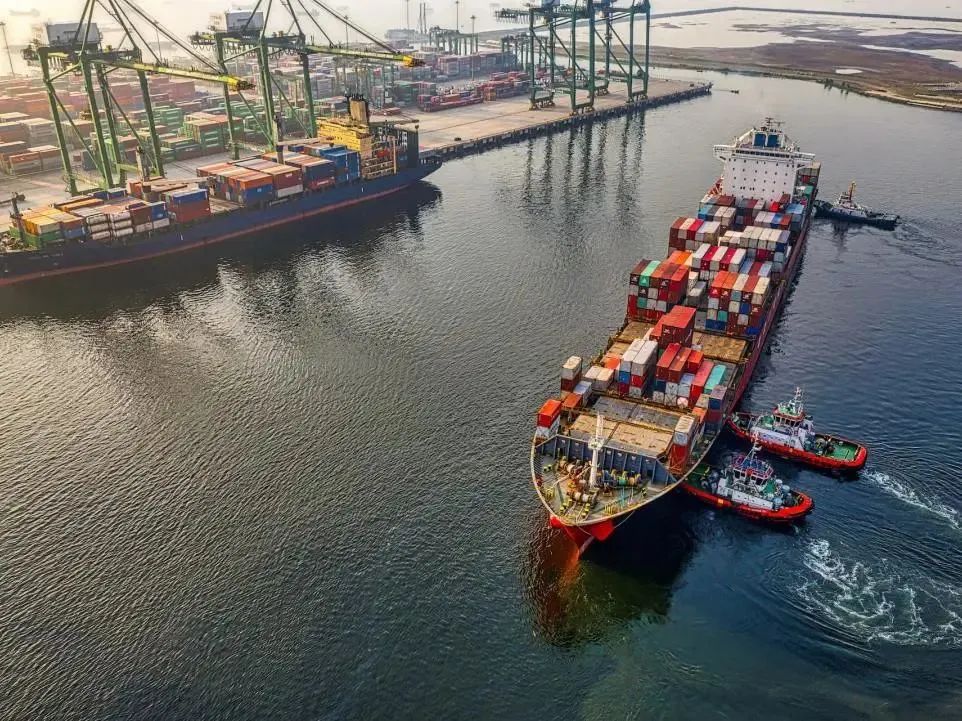
01. What does “automated” port horizontal transportation mean?
Now autonomous driving of commercial vehicles develops rapidly, because it transports goods rather than people, and the scenarios are relatively fixed and controllable, which can allow a larger range of exploration and trial; besides, commercial vehicles have more urgent demand for autonomous driving, especially in special scenarios such as mines and ports. In accordance with the “Blue Book on the Development of China Port Automated Driving Industry in 2021-2022” issued by China Low-speed Automated Driving Industry Alliance, the landing rate of port automated driving in 2021 was 16%.
The promotion of autonomous driving transport in ports has ternary significance:
Firstly, “autonomous driving vehicle” is conducive to reduce transport costs and improve road safety. In view of port labor shortage for a long time, population aging, and the growth of logistics industry, truck driver gap has been further widened. Reported by the “Economic Daily” earlier, as the logistics industry develops, China's truck driver gap will exceed 10 million in the future.
At the same time, as the port transport truck drivers must hold the A2-class driver license, the drivers are in short supply, resulting in the increase of transport costs, and due to the difficult and intensive port transport work, they are prone to cause fatigue driving and other safety accidents, but autonomous driving is helpful to solve these difficulties.
Secondly, “autonomous driving” is conducive to improving transportation efficiency and promoting intelligent transformation of ports. Unbalance of port operation in peak and trough is one of the operation pain points. The large-scale ships lead to the reduction of port of call and the significant change of loading and unloading volume, intensifying the drop between the peak and the trough of operation. In case of autonomous driving horizontal transportation, the terminal can integrate various resources more intelligently and reduce the circumstances such as running less air of trucks, so as to improve the transportation efficiency.
Thirdly, autonomous driving transportation can save energy, reduce emission, and release environmental protection value. Traditional diesel trucks have high energy consumption and emission and produce a large amount of nitrogen oxides and particulates. Non-standard driving behavior of the drivers is one of the factors contributing to more fuel consumption. While autonomous driving trucks are generally electrically driven to reduce pollution in energy. In addition, the autonomous driving system can reduce energy consumption through precise operation and strategy optimization.
02. Technology path: “single-vehicle intelligence” or “cooperative vehicle”?
In order to realize true autonomous driving, there are currently two recognized technical routes in the industry, namely, single-vehicle intelligence and cooperative vehicle.
Single-vehicle intelligence is to give the vehicle the capability of autonomous driving through sensors, such as cameras and radar, and efficient and accurate algorithms; cooperative vehicle is to install various sensors at the vehicle end and the road end at the same time to create “smart vehicle+ intelligent road” to highly integrate human, vehicles, roads, and clouds.
In essence, cooperative vehicle and single-vehicle intelligence are not black-or-white relations, and their combination can play the role of “1+1>2”. Senior people believe that the cooperative vehicle will be of high probability in some closed scenarios, semi-closed scenarios landing, so as to play the effect of cost efficiency.
In the port scenario, due to narrow roads and the shielding of containers, tower cranes and other objects, either autonomous driving logistics vehicles or autonomous driving trucks will have some information perception defects caused by blind corners. When the vehicle runs to its blind corner area, if no person or object and other vehicles sprang suddenly can be perceived, the screeching brake or even rollover will occur, which will greatly affect operation safety and operation efficiency in the scenarios.
The cooperative vehicle technology is equivalent to installing a “God perspective” for vehicles to supplement and improve the parts of the terminal where the information cannot be covered or the perception capability is weak. In accordance with the “Application Research Report of China High-level autonomous driving Ports” issued by EO Intelligence, “Single-vehicle Intelligence+V2X” will become the main autonomous driving horizontal transportation technology route of China ports.
03. Westwell practice: Work along two lines at the same time, for both precise positioning and driving safety
As a full-stack technology supplier of autonomous driving in deep exploration of port transportation, Westwell has had innovative application practice in “autonomous driving”.
At the outset, in terms of vehicle design, the autonomous driving vehicle Q-Truck of Westwell has completely removed the human cab since the beginning of production, to bring new vitality to its R&D and operation by “removing the safety personnel” and “removing the cab”.
In the aspect of single-vehicle intelligence, Q-Truck has established a technical system of positioning, perception, decision-making, planning, and control. In order to ensure the smooth passage of vehicles in the logistics operation, the transverse movement error can be less than 5cm; meanwhile, relying on the multi-sensor fusion technology and the advanced perception algorithm, accurate perception can be realized in the case of separate vehicle head and trailer, as well as the perception of converging vehicles in the logistics operation scene and the accurate identification of dynamic and static environments.
In addition to being “smart” of the vehicle itself, Westwell has also launched a “God perspective” with WellSecurity. Sensors and cameras are arranged at key nodes of the whole port to monitor the environment, so as to realize perimeter protection, compliance operation, track analysis, etc., to help customers reduce the number of daily watchmen from 4 to 2, and reduce the manned monitoring time by 70%.
Also, the WellSecurity system can interface with the FMS uniquely designed by Westwell to fulfill the mutual complement of WellSecurity and FMS data to help perception and positioning more accurately, so as to achieve the purpose of optimizing the overall line and improving efficiency.
As the world's earliest technology enterprise to enter the port scenario, in 2018, Westwell released the global first port operation autonomous driving truck in Zhuhai Port; in 2020, it signed an order with Abu Dhabi Port, creating the first port agent operation mode of autonomous transportation in the world; in 2021, it built the worldwide first mix operation project of autonomous driving and manned driving at Hutchison Laem Chabang Terminal in Thailand; and in 2022, it released the international first intelligent battery swap autonomous driving commercial vehicle Q-Truck, which was launched in Thailand.
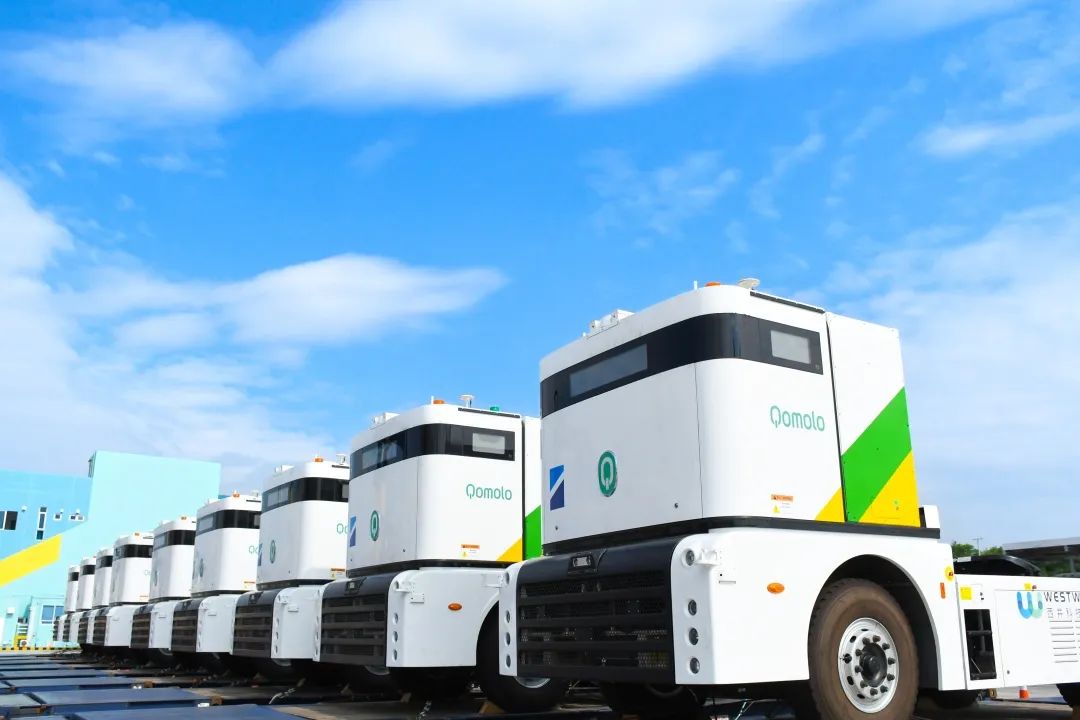
Located at the core of the autonomous driving industry chain, Westwell creates more efficient and sustainable productivity value for end users to promote the new process of global autonomous driving vehicles through unique scenario understanding capability in the process of promoting the digital intelligent upgrading of global production and life.