


Products
Industries
LinkAige
About



From top-tier design to local policy, 'hydrogen fuel' appears to be a new driving force for economic development. Policies are focusing on "supporting the development of the entire industrial chain of 'production, storage, and transportation' of hydrogen energy", "promoting the mass application of hydrogen-fueled vehicles", and "striving for breakthroughs in the clean energy sector for heavy load trucks and vessels". This piece will outline the global development pattern of hydrogen fuel cell vehicles. Then, turning back to Chinese contexts, we will discuss how to maximize the advantages of hydrogen fuel in the heavy truck industry.
01. Global development begins with passenger vehicles, led by Japan, Korea, Europe, and America.
In recent years, many countries have issued policies to promote the development of fuel cells from an energy strategy perspective. Currently, hydrogen fuel cell vehicles in Japan and other developed countries and regions have formed a preliminary business model.
Japan: Development started with passenger vehicles, gradually extending to commercial vehicles. Manufacturers such as Toyota, Honda, and Hyundai launched hydrogen fuel cell vehicle models between 2013 and 2015.
South Korea: Leading automotive enterprises dominate the hydrogen energy industry, and supporting enterprises participate in the entire industrial chain. In recent years, due to strong government support, the development speed has exceeded that of Japan and China.
Germany: Initially, commercial test runs were conducted by building hydrogen fuelling stations for imported vehicles. Now, the construction of such stations in Germany is developing rapidly, and the number exceeds that of the United States.
America: Beginning with passenger vehicles, hydrogen fuel cell vehicle sales fell 12% in 2019, according to the California Fuel Cell Partnership's sales statistics, despite the existence of hydrogen vehicles since the 1970s and policies encouraging hydrogen energy development in the United States. Only 153 hydrogen fuel cell passenger vehicles were sold in the U.S. in the third quarter of this year, down 82 percent from the same period last year.
02. China focuses on the commercial vehicle field, fully exploiting respective advantages.
China recognizes the enormous potential of hydrogen for automotive applications. In March 2022, the National Development and Reform Commission (NDRC) and the National Energy Administration (NEA) jointly issued the "Medium- and Long-Term Plan for the Development of the Hydrogen Industry (2021-2035)" (hereinafter referred to as the "Plan").
The Plan, as the first national strategic plan for hydrogen energy, unequivocally defines hydrogen as an energy resource and clearly identifies hydrogen energy as an integral part of the future national energy system. The Plan focuses on hydrogen energy applications, predominantly on fuel cell vehicles in the transportation sector.
Contrary to other countries' approach of starting hydrogen fuel cell development with passenger vehicles, China prioritizes commercial vehicles such as heavy trucks and long-distance buses. On one hand, commercial vehicles produce high emissions, so utilizing hydrogen fuel cells holds significant environmental value. Particularly, heavy trucks contribute the most to carbon emissions in the transportation sector. On the other hand, compared to countries like the US and Japan that pioneered hydrogen vehicles, the density of hydrogen filling stations in China is relatively sparse. Due to the still maturing corresponding technologies and the high cost of constructing numerous hydrogen filling stations, it is challenging to realize the adoption of hydrogen for individual passenger vehicles in the near future.
Consistent with industry consensus, China's hydrogen fuel cell vehicle industry chain is at the stage where electric vehicle development was ten years ago — the demonstration and promotion stage. Currently, the promotion of hydrogen fuel cell vehicles is largely guided and supported by national policies. These central and local hydrogen energy industrial policies cover aspects such as breakthrough of core technologies, construction of hydrogen filling stations, and support for demonstration application areas. With these policies' implementation, hydrogen fuel cell vehicles' market growth trajectory is expected to replicate that of power battery vehicles.
03. Hydrogen fuel cell heavy trucks have significant advantages, with sales increased by 160% year-on-year from January to September.
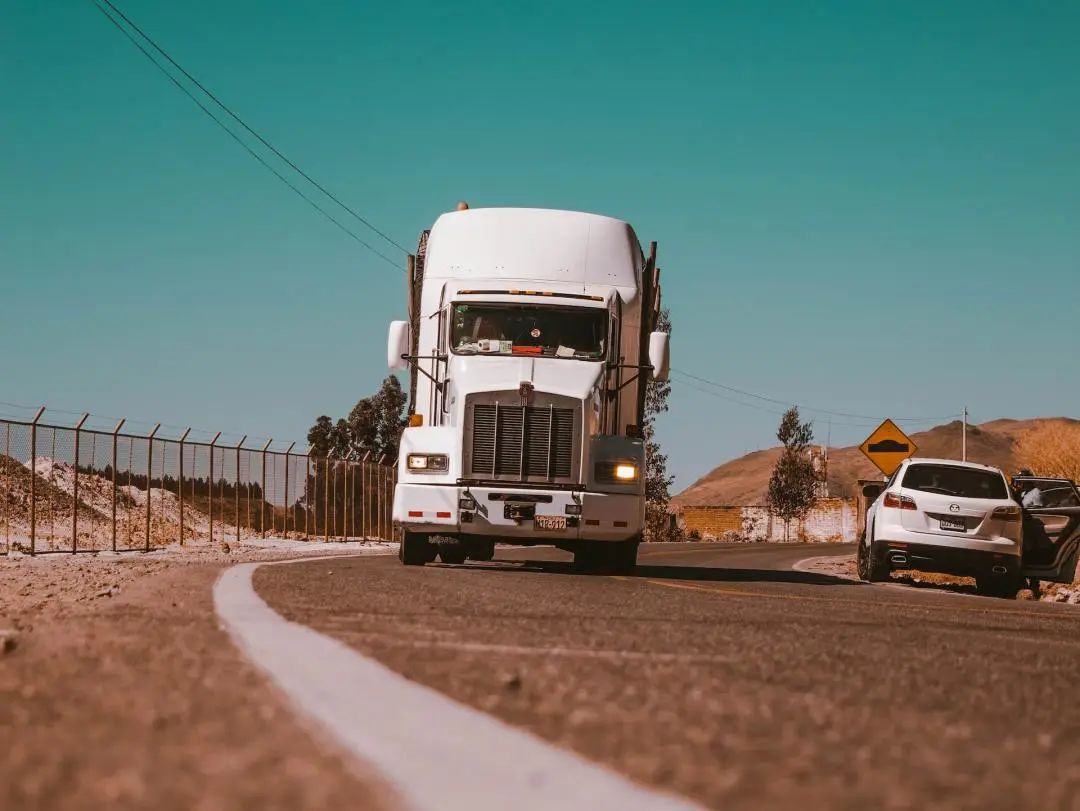
Among commercial vehicles, heavy trucks have become the focus of “carbon reduction” due to heavy loads, long driving distances, and high fuel consumption. Compared to pure electric and hybrid-powered vehicles, hydrogen fuel cell vehicles possess attributes particularly suitable for heavy trucks.
Firstly, heavy truck transport routes are relatively fixed, which facilitates the placement of the necessary infrastructure such as hydrogen refilling stations. For example, in ports, highways, and other relatively enclosed and fixed routes, only a few hydrogen refilling stations are needed to meet the demands of hydrogen fuel cell heavy trucks.
Secondly, hydrogen fuel cells have a high energy density and compact size. On one hand, for the same driving range, heavy trucks can effectively reduce their deadweight and increase payload capacity. On the other hand, this also improves their range. Generally, a hydrogen fuel cell heavy truck has a range of 400-800km, with a maximum of 1,000km, while a pure electric heavy truck's range is typically around 200km.
Thirdly, hydrogen fuel cells can achieve zero pollution and zero emissions. According to a report by “Consumer Daily”, despite commercial vehicles making up only about 11% of total vehicle ownership in China, they represent a preliminary estimate of 590 million tons of carbon dioxide emissions each year. This accounts for 56% of the total carbon emissions from vehicles. As such, hydrogen fuel cell heavy trucks will undeniably boost efforts to achieve the “double carbon” environmental protection goals.
Furthermore, according to a survey by CVWorld.cn, the sales of hydrogen fuel cell vehicles in new energy heavy truck terminals represented 7.46% of the total for the year 2021. From January to September of this year, total sales of hydrogen fuel cell heavy trucks reached 1,056 vehicles, a year-on-year increase of 160%. In the previous September, the actual sales of new energy heavy trucks made up 6.92% of total sales, showing a continuing “small explosion” of growth throughout August and September.
04. Technical Bottleneck Still Exists, Practice and Exploration Continue
Although hydrogen fuel cells have obvious advantages, bottlenecks still exist. Hydrogen production, storage, transportation, and refueling technology continue to hinder the commercialization of hydrogen fuel cell heavy trucks. The "Medium- and Long-Term Plan for the Development of Hydrogen Industry (2021-2035)" outlines a development model and sets medium- and long-term goals for China, aiming to gradually build a complementary development model of fuel cell electric vehicles and lithium battery pure electric vehicles to help commercialize hydrogen energy vehicles.
Prior to the issuance of the Plan, hydrogen fuel cell vehicle demonstration city clusters were approved, with five demonstration city clusters – Beijing, Shanghai, Guangdong, Henan, and Hebei – set to be the main bases for promoting hydrogen fuel cell commercial vehicles in the next few years. Demonstration applications of hydrogen fuel cell commercial vehicles have been launched in various cities.
It is estimated that since July this year, the disclosed number of orders for hydrogen fuel cell heavy trucks has reached 10,000. In July, Beijing Municipal Road and Bridge Building Material Group Co., Ltd. received the first batch of 40 hydrogen fuel cell heavy trucks in Beijing and plans to introduce a total of 550 hydrogen fuel cell heavy trucks in batches during the "14th Five-Year Plan." In August, 100 FAW Jiefang fuel cell heavy trucks were delivered to an operator in Shanghai.
On October 28, the international automobile city hydrogen refueling station project, jointly invested in, constructed, and operated by Shanghai Electric Power Co., Ltd. of State Power Investment Corporation Limited, Shanghai Sunwise, and Shanghai Jiading International Automobile City, officially started construction. The station has a daily hydrogen supplying capacity of 1,600 kg and is currently the largest hydrogen refueling station in Shanghai with a hydrogen supplying pressure of 70 MPa.
Regarding the "Medium- and Long-Term Plan for the Development of Hydrogen Industry (2021-2035)", Shanghai's hydrogen industry aims to achieve the industrial strategic target of "hundreds of stations, a hundred billion yuan, and thousands of vehicles" by 2035. By 2024, Shanghai plans to complete the demonstration and promotion of 5,000 vehicles (including 4,200 fuel cell vehicles planned for promotion in Shanghai) and construct 73 hydrogen refueling stations (including 50 hydrogen refueling stations planned to be built in Shanghai), comprehensively breaking through the technical barriers of 8 key components and improving the fuel cell vehicle industrial policy system, thereby building a fuel cell vehicle industrial cluster with the largest industrial scale, best ecological environment, and strongest overall competitiveness.
As per the technical roadmap plan for hydrogen fuel cell vehicles, China's hydrogen fuel cell vehicle numbers are expected to reach 50,000 to 100,000 in 2025 and 800,000 to 1,000,000 in 2030 to 2035, mainly comprising trucks, buses, and heavy freight vehicles.
Currently, hydrogen fuel cell heavy trucks in China are experiencing rapid growth. It is expected that widespread application of hydrogen fuel cell heavy trucks will inject fresh strength for improving operational efficiency and reducing carbon emissions. However, achieving commercialization still has a long way to go. Ouyang Minggao, an academician of the Chinese Academy of Sciences and vice chairman of China EV100, believes that the key decision period for hydrogen fuel cell vehicles is in the next five years, with a clear judgment possible by 2025, according to the CBN Report. Meanwhile, Ming Pingwen of Tongji University previously expressed hope that the full application of hydrogen energy and fuel cells will be promoted through scaled localization, allowing costs to be truly accepted by the market by 2030.
References:
Current Situation and Prospect of Fuel Cell Commercial Vehicle Industry, Tan Xuguang & Yu Zhuo, Strategic Study of CAE
China EV100 “Development Measures of Hydrogen Fuel Cell Industry from the Modes of Various Countries”
CBN “High Cost, Slow Commercialization, Where Is the Hydrogen Fuel Cell Vehicle Industry Stuck?”
Shanghai Municipal Development and Reform Commission [Diagram] “Medium-and Long-term Plan for the Development of Hydrogen Industry of Shanghai (2022-2035)”